

August 12, 2026 total solar eclipse: what to expect and how to plan ahead
August 12, 2026 is not just another astronomy date to circle and forget. It is the next total solar eclipse after a long wait, and for a few minutes the Moon’s shadow will sweep from the Arctic across Greenland, clip Iceland, and then race into Spain before leaving Earth over the western Mediterranean. Inside that narrow track, day will collapse into twilight and the Sun’s corona will appear. Outside it, even a dramatic partial eclipse is still not the same event.
That distinction matters more than almost anything else you do to plan. If you want the real, unforgettable totality experience, start by checking whether your location is actually inside the path using the Helioclipse Eclipse Explorer / 3D map. Then think about travel, horizon, weather, and eye safety early enough that you are not making rushed decisions in August.
This guide walks through what the eclipse will be like, where the best planning opportunities are, what partial viewers elsewhere can expect, and how to prepare without turning the whole thing into a stress project.
Why this eclipse is such a big deal
A total solar eclipse happens somewhere on Earth roughly every 18 months on average, but any given region can wait decades. Europe has not had a widely accessible total solar eclipse since 1999, which helps explain why August 12, 2026 is already drawing so much attention. NASA lists this event as a total solar eclipse visible in Greenland, Iceland, Spain, Russia, and a small area of Portugal, with a partial eclipse visible across much larger parts of Europe, Africa, North America, and surrounding oceans.
What makes this one especially compelling is the combination of accessibility and atmosphere. The path is about 293 kilometers wide at one point according to Sky & Telescope’s planning coverage, and the maximum totality is about 2 minutes 18 seconds near Iceland. That is not one of the ultra-long eclipses people talk about for seven-minute records, but it is absolutely long enough to feel the full emotional sequence: the light draining away, the temperature drop, the horizon glowing in every direction, and then the impossible black disk with the corona around it.
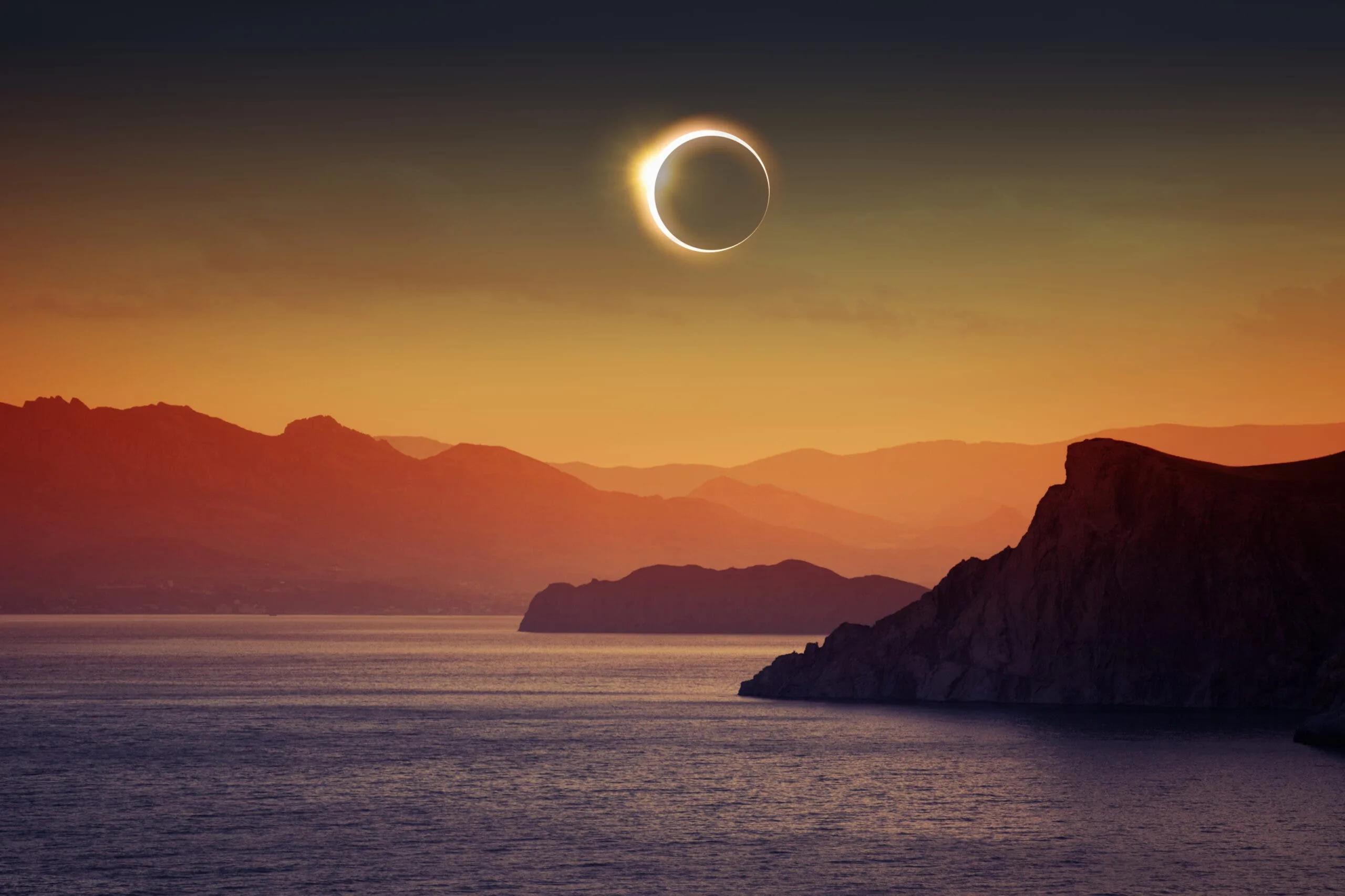
It also has a visual twist many eclipses do not. In Spain and the Balearic region, the eclipsed Sun will sit low in the west. That means this is not just a sky event overhead. It can become a landscape event: a darkened horizon, long shadows, and the chance to watch totality near sunset geometry. That is the kind of eclipse people remember in scenes, not just in timestamps.
Totality vs. partial eclipse: the planning mistake to avoid
If you remember only one thing from this article, make it this: 99% partial is not basically total.
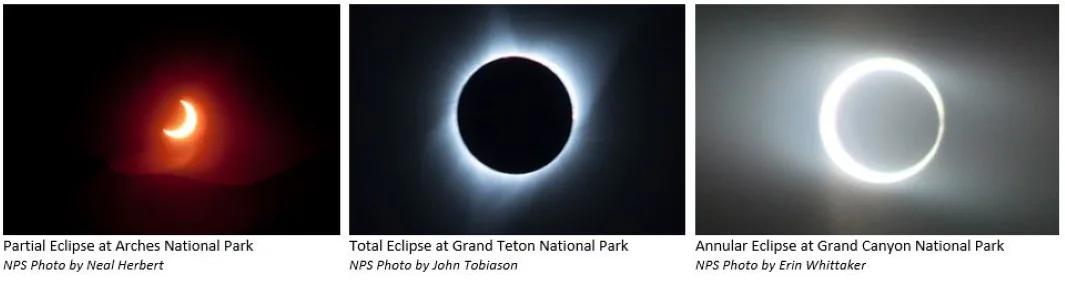
Outside the path of totality, the Sun never becomes fully covered. The sky may dim. The light may look strange. You may notice crescent shadows under trees. But you will not see the corona with the naked eye, and you must keep certified solar viewers on the entire time. Inside the path, by contrast, there is a brief interval when the Moon completely covers the Sun’s bright face. That is totality. Only then, and only if you are truly inside the path, is it appropriate to remove eclipse glasses for direct viewing of totality itself.
NASA’s eclipse basics and the American Astronomical Society’s safety guidance both emphasize this difference because it changes everything: what you see, how you prepare, and whether the trip is worth major travel effort. If you are deciding between “close to the path” and “inside the path,” choose inside the path every time.
This is where a detailed map matters. Use the Helioclipse Eclipse Explorer / 3D map to check whether a town, beach, hilltop, or roadside stop is actually in totality and how close it is to the centerline. A location near the centerline usually gets a longer total phase than a location near the edge. Sometimes that difference is the difference between a rushed, blink-and-it’s-gone totality and a more relaxed minute or two.
Where the path goes, in plain language
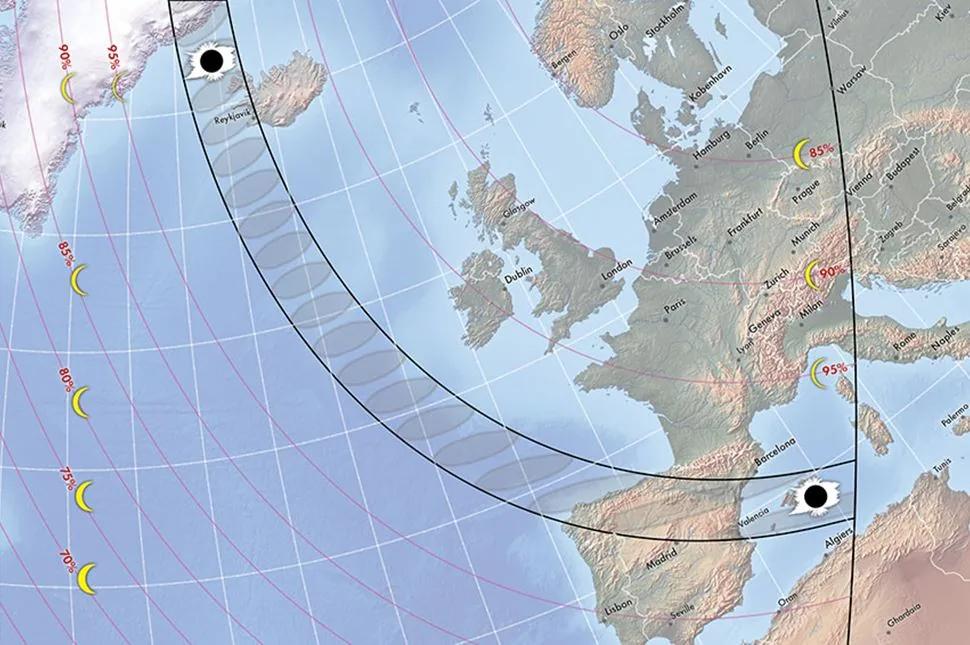
The Moon’s umbral shadow begins in remote northern Russia, passes near the Arctic, runs down Greenland’s eastern side, clips western Iceland, then crosses the North Atlantic to northern Spain and continues southeast toward the Balearic region before ending over the sea.
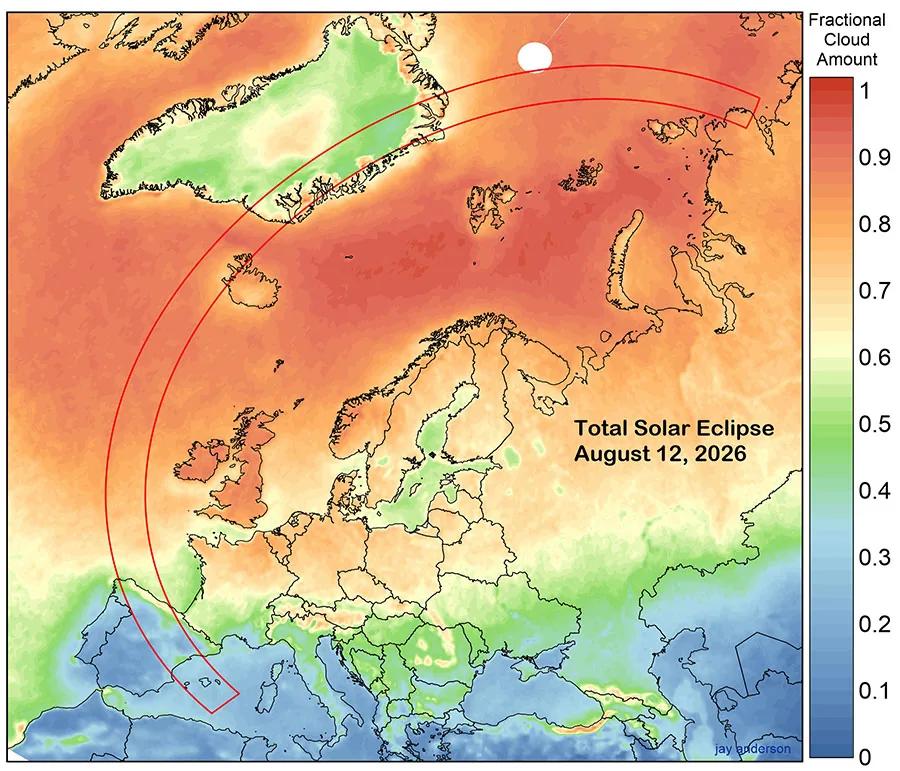
For most travelers, the practical path story has three main chapters:
Greenland
Greenland offers a high-latitude eclipse experience with huge scenery and very different logistics from Europe. Parts of the track cross the ice cap and remote eastern coast, so this is not the easy, drive-anywhere option. For some travelers, expedition cruises will be the realistic way to chase clear skies there.
The appeal is obvious: dramatic landscapes, low population density, and a sense of seeing the shadow arrive in a place that already feels otherworldly. The tradeoff is equally obvious: more complicated transport, fewer backup options, and weather that can be unforgiving.
Iceland
Iceland is likely to be one of the headline destinations because it combines relative accessibility with strong eclipse drama. The greatest eclipse is not far offshore, and Reykjavík is expected to be inside the path, with Sky & Telescope noting about 57 seconds of totality there. That is enough to experience the core event, but not the longest possible duration.
Move closer to the centerline in western Iceland and totality improves, topping out near 2 minutes 18 seconds offshore. That is a meaningful jump. An extra minute of totality is not a small upgrade; it changes the pace of the experience. With only around 50 to 60 seconds, everything feels urgent. With closer to two minutes, you have time to look up, look around, breathe, and actually register what is happening.
Spain and the Balearic region
Spain is where many eclipse chasers are likely to focus. The path crosses the country from the north coast toward the Mediterranean, missing some major cities but passing through many reachable inland areas. Spain’s biggest advantage is not just access. It is the combination of a broad travel network, many possible viewing sites, and generally better late-summer cloud prospects than Iceland or Greenland.
Sky & Telescope’s reporting cites weather analysis suggesting some parts of Spain and nearby Mediterranean waters may have cloud-free odds as high as about 65%, with inland Spain often favored over more obstructed or storm-prone terrain. The Sun will also be low in the west, around 12° high in parts of Spain and only a few degrees above the horizon in parts of Mallorca. That low altitude is visually spectacular, but it creates a practical requirement: you need a clean western horizon.
What viewers in each main region can actually expect
A good eclipse plan is not just “pick a country.” It is “pick the kind of experience you want.”
Iceland: short-to-medium totality, big atmosphere, weather flexibility
Iceland may deliver the most cinematic buildup. The low Sun, ocean horizons, volcanic landscapes, and the possibility of seeing the shadow approach across open space make it easy to understand why so many people are interested.
But Iceland planning should be honest about the weather. Cloud risk is a real issue. The best strategy is usually mobility: rent a vehicle if practical, watch forecasts closely, and avoid locking yourself into a single scenic viewpoint too early. A beautiful peninsula means very little if a cloud bank parks on it at the wrong hour.
For Reykjavík specifically, the city’s inclusion in totality makes it attractive for people who want infrastructure, lodging, and a simpler trip. The tradeoff is shorter totality and potentially heavier crowds. If you are traveling with children, older relatives, or a group that values easy logistics over squeezing out every extra second, that may be a perfectly smart choice.
If your group is more eclipse-first than comfort-first, western Iceland offers stronger duration potential. The key question becomes whether you can stay mobile enough to react to forecast changes in the final 24 to 48 hours.
Spain: better weather odds, low western Sun, and lots of planning nuance
Spain is likely to be the default recommendation for many first-time eclipse travelers, and that is understandable. It is easier to reach than Greenland, often less weather-risky than Iceland, and full of inland locations where you can potentially set up with a broad western view.
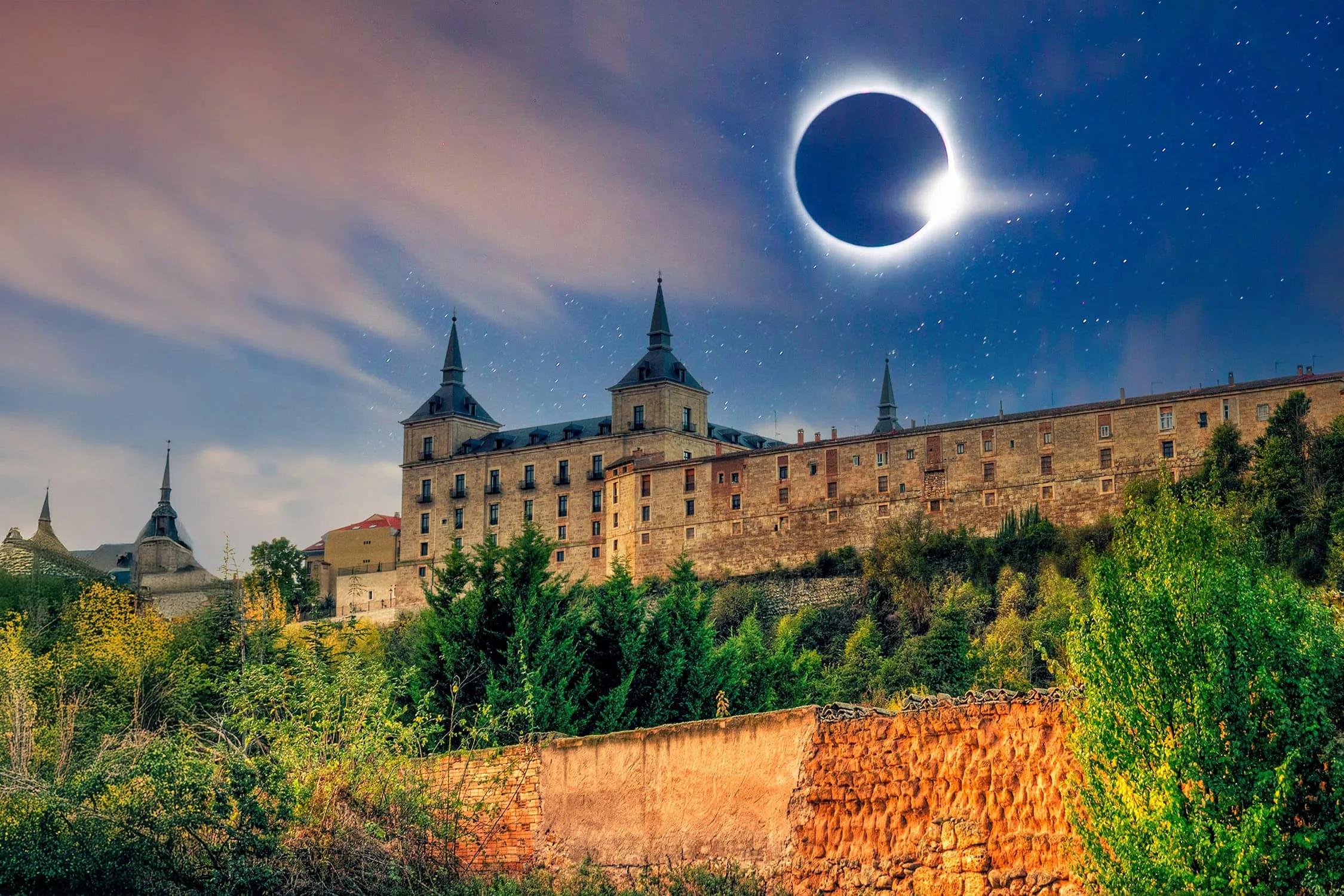
But Spain is not one uniform answer. The low Sun angle means local horizon matters a lot. A site with hills, buildings, trees, or ridgelines to the west can ruin the final minutes. A place that looks perfect at noon can be a bad eclipse site at sunset-like solar altitude.
That is why inland open country can be so attractive. Flat or gently rolling terrain with a clear west-northwest view may beat a more famous tourist location with a blocked horizon. In practical terms, this is a “scout your line of sight” eclipse.
There is also a crowd factor. August is peak travel season in Spain and the Mediterranean. Coastal hotspots may be packed even before eclipse tourism is added on top. If you want a calmer experience, inland towns and rural viewpoints inside the path may be more appealing than headline beach locations. If you want the near-horizon drama of the Balearics, you may accept shorter or trickier viewing windows in exchange for a truly unusual visual setup.
Greenland: expedition energy and fewer easy backups
Greenland is the choice for people who want the eclipse to feel like an expedition, not just a trip. The scenery could be extraordinary, and cruise-based viewing may offer the ability to reposition for weather.
But this is not the easiest recommendation for first-timers unless the travel style itself is part of the dream. Costs can be higher, logistics tighter, and backup plans thinner. If your main goal is simply to maximize your chance of seeing totality, Spain may be the more forgiving option.
What about partial viewers elsewhere?
This eclipse will also be widely visible as a partial eclipse outside the path. That includes large parts of Europe and even parts of northeastern North America. Sky & Telescope gives a few useful examples: roughly 16% coverage in Cambridge, Massachusetts, about 31% in Halifax, and about 53% in St. John’s, Newfoundland. In northwestern Europe, the partial phase becomes much deeper, with London around 91% and Oslo around 83% in the cited examples.
Those are impressive numbers, but they can mislead people into thinking they are “close enough.” They are not. A 90%-plus partial eclipse is still a partial eclipse. The sky does not behave like totality, the corona does not appear, and safe solar viewing remains necessary from start to finish.
That said, a deep partial eclipse near sunset can still be beautiful. If you are outside the path, treat it as its own event: a chance to watch the Sun turn into a narrowing crescent, to project crescents through leaves or a colander, and to share a safe observing session with family or a school group. Just do not confuse it with totality.
Timing: what the day will feel like
The eclipse reaches maximum at about 17:47 UT according to Sky & Telescope’s 2026 eclipse overview. Your local clock time will depend on where you are, and exact contact times vary by location, which is why a location-specific tool matters.
Still, the rhythm of the day is predictable.
First comes the long partial phase. This is the patient part. Through certified viewers, the Sun slowly turns into a bite, then a deeper crescent. Casual observers often underestimate how gradual this feels at first.
Then, if you are in the path of totality, the pace suddenly changes. In the final minutes before totality, daylight becomes weird rather than simply dim. Colors flatten. Shadows sharpen. The landscape starts to look wrong in a way that is hard to describe until you see it. If the Sun is low, the horizon can become part of the show.
At totality itself, the bright solar surface disappears and the corona becomes visible. This is the moment people travel across oceans for. It is also the moment that ends faster than you expect. Even 2 minutes 18 seconds is brief in human terms.
Afterward, the reverse happens quickly. The first bright reappearance of the Sun means totality is over, and certified eye protection goes back on immediately for direct viewing.
For planning, that means you should not arrive “just in time.” You want to be parked, set up, fed, hydrated, and calm well before the final partial phase begins to accelerate.
Eye safety: simple rules that matter
The safest rule is also the easiest to remember: if any part of the Sun’s bright face is visible, use a proper solar filter.
According to the American Astronomical Society’s eclipse eye safety guidance, it is safe to look directly at the Sun only through special-purpose solar viewers that conform to the ISO 12312-2 standard, except during the brief total phase of a total solar eclipse when the Sun is completely covered and only if you are inside the path of totality.
A few practical points matter here:
- Ordinary sunglasses are not safe.
- Eclipse glasses should be inspected before use; scratched, torn, or damaged viewers should be discarded.
- Do not use eclipse glasses with unfiltered binoculars, cameras, or telescopes.
- For optics, solar filters must be attached securely to the front of the instrument.
- Children should be supervised.
If you are planning for a family, classroom, or group trip, buy viewers early rather than assuming you will find them at the last minute. If you need certified viewers, Helioclipse offers solar eclipse glasses designed for safe direct solar viewing when used as directed.
One reassuring point from the AAS: not every person in a group needs to stare continuously. Partial phases move slowly. People can take turns with viewers, compare what they see, and use indirect methods like pinhole projection as a supplement. That makes group planning easier than many people assume.
How to choose your viewing location without overcomplicating it
A good eclipse site usually comes down to five questions.
1. Are you definitely inside the path?
Do not trust a vague regional description. Check the exact site on the Helioclipse Eclipse Explorer / 3D map. A hotel in the “eclipse region” may still be outside totality.
2. How much totality do you get there?
Centerline locations generally give longer totality than edge locations. If two sites are equally practical, the one with more time is usually worth choosing.
3. What is your western horizon like?
This is especially important in Spain and the Balearics because the Sun will be low. A blocked horizon can cost you the best part of the event.
4. How mobile can you be for weather?
Iceland especially rewards flexibility. Spain may also benefit from day-before adjustments. A fixed reservation with no transport can be more limiting than it first appears.
5. What kind of day do you want?
Some people want a city base, easy bathrooms, and a short walk. Others want a remote ridge, a vineyard road, or a coastal overlook. Neither is wrong. The best site is the one your group can actually reach, enjoy, and stay calm in.
Travel planning: book early, but leave yourself options
This eclipse lands in peak travel season for some of its most attractive destinations. That means the usual eclipse advice applies with extra force: tell your people early, reserve the essentials early, and avoid a plan that collapses if one road, ferry, or cloud deck goes wrong.
For many travelers, the smartest approach is a layered plan:
- Book lodging inside or near the path well in advance.
- Prefer refundable or flexible options when possible.
- Rent transport if weather mobility matters.
- Arrive at least a day early.
- Identify one primary site and one or two backups.
- Check sunset direction and local horizon before eclipse day.
If you are organizing a family trip, school outing, or friend-group reunion, start the group chat now rather than later. Eclipses are much easier to enjoy when the logistics are settled early and everyone knows the safety rules.
And if you are the planner in the group, do yourself a favor: assign roles. One person handles route options, one handles viewers, one handles snacks and water, one handles weather checks. That sounds small, but it keeps eclipse day from turning into a dozen avoidable questions at once.
What to bring on eclipse day
You do not need a truck full of gear. You do need the right basics.
Bring:
- ISO 12312-2 compliant eclipse viewers for direct solar viewing
- Water and simple food
- Sun protection for the hours before totality
- Layers, because temperature and wind can feel different during the eclipse
- A charged phone and offline directions if coverage may be weak
- A chair or blanket if you will be waiting a while
- Any medications or child essentials you would not want to hunt for in traffic
If you are photographing the eclipse, keep your ambitions realistic. A total solar eclipse is one of the easiest events to ruin by spending the whole time fiddling with equipment. If this is your first totality, consider making photography secondary. The memory of looking up is usually better than the memory of troubleshooting a camera menu.
If you cannot travel into totality
Not everyone can get to Iceland or Spain in August 2026, and that does not mean you should ignore the eclipse.
A deep partial eclipse can still be a wonderful shared event if you frame it correctly. Make it social. Bring certified viewers. Show children crescent projections under trees. Explain why the Sun looks like it has a bite taken out of it. Watch how the light changes. Treat it as a science-and-wonder afternoon, not as a failed version of totality.
If you are on the fence about traveling, though, this is the honest push: if totality is realistically within reach for you, it is worth serious consideration. People who have seen one total solar eclipse rarely describe it as merely interesting. They describe it as disorienting, emotional, and much bigger than expected. That reaction is not hype. It is what happens when the sky does something your brain does not think daytime skies are allowed to do.
On-site next steps
- Explore your exact location on the Helioclipse Eclipse Explorer / 3D map to confirm whether you’re inside totality, compare durations, and check how close you are to the centerline.
- If you’re planning to watch any partial phases directly, get your Helioclipse solar eclipse glasses early so your group is covered with ISO 12312-2 compliant viewers.
- Want more planning and safety help? Browse the Helioclipse blog for eclipse guides, gear advice, and viewing tips.